

01.Overview
A private multi-site healthcare operator with outpatient clinics and day-surgery centers across Dubai and major Saudi metros was experiencing rising patient demand but uneven capacity utilization and inconsistent patient experience.
Despite increasing outpatient demand, appointment bottlenecks, fragmented operational workflows, and inconsistent service experiences were constraining growth.
The client wanted to understand which outpatient service lines to prioritize, how operational bottlenecks could be reduced without affecting clinical quality, and how patient experience influenced repeat visits and referrals.
Researchers were engaged to build a scalable outpatient growth blueprint with measurable operational and patient outcomes.
02.The Challenge
Rising demand exposed several operational inefficiencies across outpatient services.
The organization faced:
- Appointment bottlenecks are reducing operational efficiency
- Inconsistent patient experiences across locations
- Uneven clinic utilization despite growing demand
- Delays affecting satisfaction and repeat visits
The client wanted answers to key operational questions:
- Which service lines should be prioritized for growth?
- How can bottlenecks be reduced without harming clinical quality?
- How do patient experience metrics influence repeat visits and referrals?
The goal was to improve operational performance while maintaining care quality and creating a better outpatient experience.
03.Research Approach
Researchers conducted a mixed-method research program combining primary and secondary research to understand operational bottlenecks, patient behavior, and outpatient growth opportunities.
Market Context
Dubai’s outpatient healthcare market continued expanding, with outpatient visits exceeding 13 million in 2024, representing approximately 6.5% growth compared to 2023.
Saudi Arabia’s healthcare ecosystem also scaled significantly, supported by hundreds of hospitals and thousands of primary care centers and healthcare complexes.
Primary Research Conducted
Patient Experience Survey
A large-scale patient experience study was conducted to understand satisfaction drivers, waiting perceptions, and repeat visit intent.
Sample Size: n = 1,040
- Dubai: 520 patients
- Saudi Arabia: 520 patients
Journey Ethnography
Researchers conducted 18 accompanied patient visits to observe the full outpatient journey—from booking and registration to consultation and pharmacy experience.
Time-Motion Study
Workflow analysis was conducted across 12 clinics covering three specialties:
- Family Medicine
- Dermatology
- Orthopedics
Clinical Staff Interviews
Researchers interviewed 28 physicians and nurses to understand workflow challenges and operational inefficiencies.
Mystery Calling Exercise
A total of 180 mystery calls were conducted to benchmark:
- Appointment accessibility
- Pricing transparency
- Service responsiveness
- Insurance-related communication
against competing providers.
04.Key Findings
Wait-Time Perception vs Reality
One of the strongest findings revealed that transparent communication around wait times influenced patient satisfaction almost as much as actual wait duration.
Patients who received estimated wait times and proactive updates reported significantly higher satisfaction levels, even when wait durations remained similar.
This highlighted expectation management as an important patient experience lever.
Key Bottleneck Points
Researchers identified several recurring operational friction points:
Registration Duplication
Repeated document verification and administrative processes slowed check-ins and increased waiting times.
Insurance Pre-Approval Delays
Certain service lines experienced delays due to insurance authorization dependencies.
Pharmacy Handoffs & Mixed Queues
Combined queues for prescription refills and new medications created congestion and slowed patient flow.
The research showed that several bottlenecks were process-related rather than resource-related.
Service-Line Prioritization
Researchers combined:
- Demand growth
- Cycle time efficiency
- Service margins
To identify high-priority outpatient service lines for growth.
Priority opportunities included:
- Primary Care
- Dermatology
- Selected Diagnostics
These service lines offered the strongest combination of patient demand, operational efficiency, and margin potential.
05.Operational Impact (Modeled)
Following the redesign framework, Researchers modeled expected operational and patient experience improvements.
Outpatient Performance KPIs (Modeled)
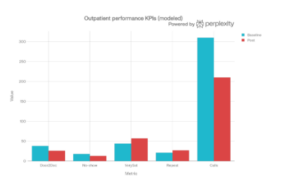
Figure 7: Modeled improvements in door-to-doctor time, no-shows, repeat visits, and call volume.
| KPI | Before | After (Modeled) |
| Median Door-to-Doctor Time | 38 Minutes | 26 Minutes |
| No-Show Rate | 18% | 13% |
| Repeat Visits Within 90 Days | 21% | 27% |
| Calls Per 1,000 Appointments | 310 | 210 |
“Very Satisfied” Patient Rate (Modeled)
Patient satisfaction improved significantly after the redesign.
The percentage of patients classified as “Very Satisfied” increased from:
44% → 57%
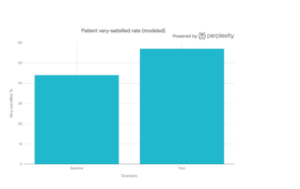
Figure 8: Modeled increase in “Very Satisfied” patient ratings after redesign.
06.Strategic Insights
The study identified several practical levers for outpatient growth.
Treat Access & Experience as Growth Drivers
Patient access and service quality should be viewed as growth levers, not only operational cost concerns.
Prioritize Process Redesign Before Capex
Researchers found that many operational bottlenecks could be resolved through:
- SOP redesign
- Better information flow
- Administrative simplification
Before investing in additional infrastructure.
Build One Digital Front Door
A unified patient experience ecosystem was recommended, including:
- Appointment booking
- Insurance pre-check
- Document capture
- Automated communication
to reduce operational friction and improve patient experience.
Monitor KPIs Weekly
Clinic-level operational huddles and weekly KPI tracking were recommended for:
- Waiting times
- No-show rates
- Patient satisfaction
- Repeat visits
to enable faster decision-making and operational improvements.
07.Business Impact
The redesigned outpatient blueprint created a scalable path toward growth across selected clinics in Dubai and Saudi Arabia.
Modeled outcomes indicated:
✔ More visits per clinician per day
✔ Lower no-show rates
✔ Reduced contact-center burden
✔ Improved patient satisfaction
✔ Higher repeat visit behavior
The framework was positioned for rollout across selected outpatient facilities as a long-term outpatient growth enabler.
Looking to Improve Healthcare Operations & Patient Experience?
Researchers.me helps healthcare operators improve operational performance, patient journeys, and service delivery through market research, operational studies, and customer experience intelligence.